
I am an Assistant Professor at Academy of Arts & Design (Information Design), Tsinghua University. Prior to this, I was a postdoctoral researcher at Department of Computer Science and Technology, Tsinghua University, working with Prof. Jie Tang and Prof. Minlie Huang. I received my Ph.D. degree from the College of Computer Science at Sichuan University. I also worked as a research intern at Alibaba DAMO Academy under the supervision of Prof. Rong Jin (Alibaba DAMO) and Dr. Mang Wang (ByteDance). I am participating as one of the contributors to project VGen and SuperBench (清华大学-基础模型中心). All projects gained a total of 5000+ stars.
My research lies at the intersection of computer vision and artificial intelligence. My research interests include Artificial Intelligence, Computer Vision, AIGC, Agent, and AI for Creativity. Let’s do something fun.
📖 I am looking for motivated master, interns (remote welcome), and postdoc researchers, feel free to reach out at fengtao.hi@gmail.com; fengt@tsinghua.edu.cn. If you are interested in joining us, we’d love to hear from you.
🔥 News
- 2026.09: 🎉 StepSTEM , RotMoLE , TARP accepted by NeurIPS 2026.
- 2026.08: 🎉 C-Flat++ (extended version of C-Flat-NeurIPS) accepted by IJCV.
- 2026.08: 🎉 We release a survey Continual Learning in Transition to reshape the scope of CL.
- 2026.08: 🎉 Our survey Parameter-Efficient Fine-Tuning for Foundation Models got accepted by IJCV.
- 2026.06: 🎉 Initial version of 🔥 Fire-OPD is released.
- 2026.05: 🎉 GUI-AiF , DFA-CIL accepted by ICML 2026.
- 2026.04: 🎉 MathFlow , BPO accepted by ACL 2026 as Main Paper.
- 2026.02: 🎉 C-Flat Turbo , DC-SFT accepted by CVPR 2026.
- 2026.01: 🎉 Lumos-1 , CogFlow accepted by ICLR 2026.
- 2026.01: 🎉 We introduce continual learning in GUI agents - GUI-AiF.
- 2025.12: 🎉 TransferCam accepted by TMM.
- 2025.11: 🎉 ACL , MoZO accepted by AAAI 2026.
- 2025.09: 🎉 Initial version of INFTY is released.
- 2025.06: 🎉 VLM-CL, SAMora accepted by ICCV 2025.
- 2025.05: 🎉 ZeroFlow , Dual-Arch, gR_MoE-LoRA accepted by ICML 2025.
- 2025.03: 🎉 TDFusion accepted by CVPR 2025 as Highlight.
- 2025.02: 📖 We release a survey Parameter-Efficient Fine-Tuning for Foundation Models.
- 2025.02: 📖 We release a survey Generative Artificial Intelligence in Robotic Manipulation.
- 2025.02: 🎉 HAR Foundation Model accepted by Information Fusion (IF=14.80).
- 2024.09: 🎉 C-Flat accepted by NeurIPS 2024.
- 2024.06: 🎉 UniGrad-FS accepted by IEEE TII (IF=11.70).
- 2024.04: 🎉 R2KD accepted by IEEE TIM (IF=5.60).
- 2024.03: 🎉 InstructVideo accepted by CVPR 2024.
- 2024.01: 🎉 ArchCraft accepted by IJCAI 2024.
- 2023.07: 🎉 RLIP v2 accepted by ICCV 2023.
- 2023.07: 🎉 RLIP accepted by NeurIPS 2022 as Spotlight.
- 2022.03: 🎉 ERD accepted by CVPR 2022.
- 2021.12: 🎉 Pose-powered ReID accepted by Pattern Recognition (IF=7.50).
- 2021.10: 🏆 Win 1st Place on Webface260M SFR Track! @ICCV MFR Challenge.
- 2021.10: 🥈 Win 2nd Place on InsightFace unconstrained Track! @ICCV MFR Challenge.
- 2021.10: 🥉 Win 3rd Place on Webface260M Main Track! @ICCV MFR Challenge.
- 2021.10: 🥉 Win 3rd Place on InsightFace ms1m Track! @ICCV MFR Challenge.
- 2021.09: 🎉 One paper accepted by ICCV 2021 @workshop.
📝 Publications
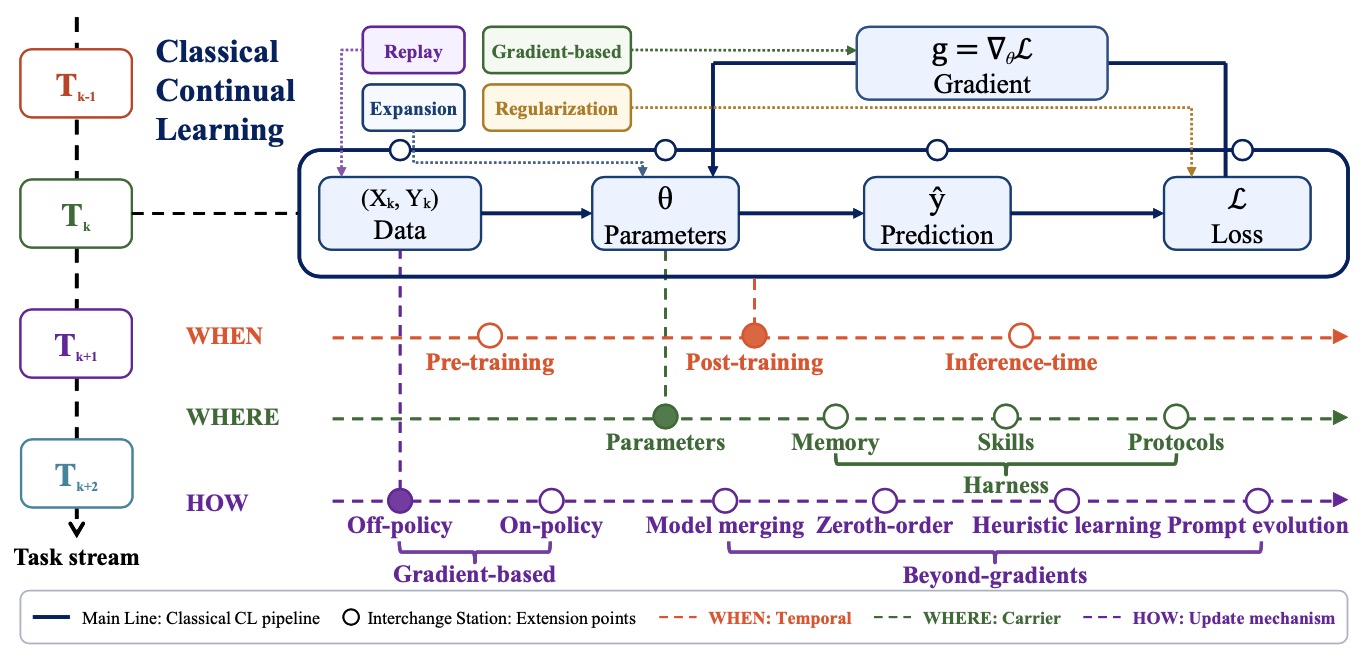
Continual Learning in Transition
Zhiyan Hou, Dan Zhang, Tao Feng*†, Liyuan Wang, Wei Li, Xiangzhao Hao, Hongyan An, Junfeng Fang, Haokai Ma, Zhaohui Xu, Haiyun Guo, Jinqiao Wang, Tat-Seng Chua
- Emerging paradigms are reshaping the scope of Continual Learning beyond traditional view.
- We release a survey to examine the evolution of continual learning through three dimensions: When, How, and Where learning occurs.
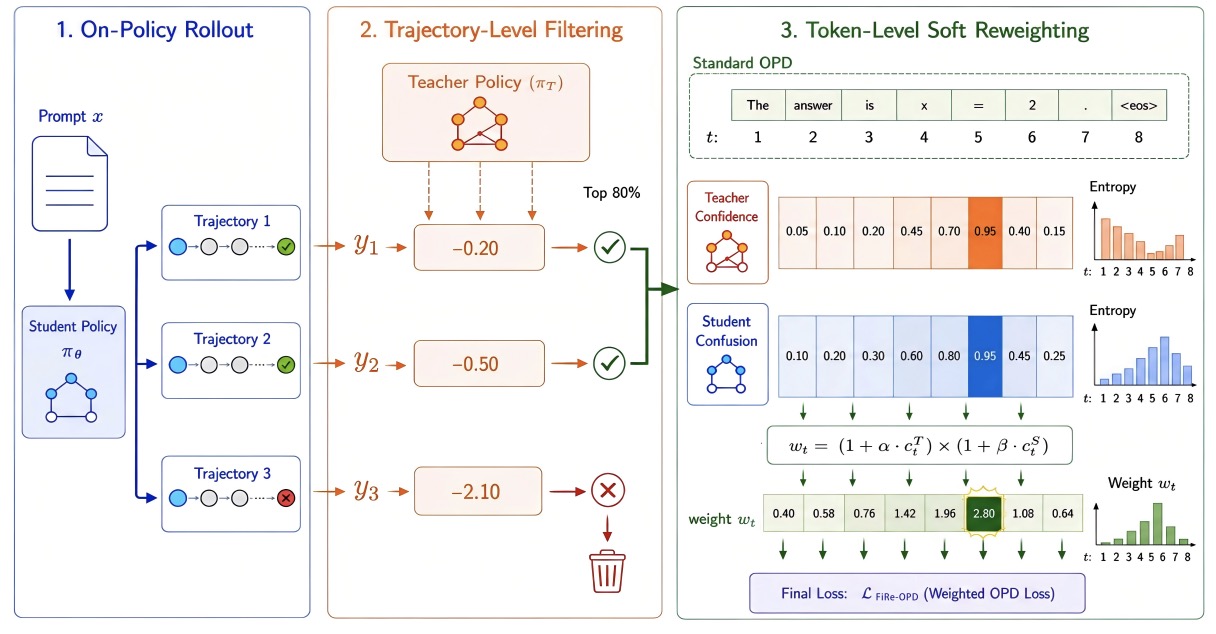
Filter, then reweight: Rethinking optimization granularity in on-policy distillation
Yuying Li, Leqi Zheng, Yongzi Yu, Wenrui Zhou, Xuchang Zhong, Xing Hu, Jing Jin, Hangjie Yuan, Tao Feng†
- FiRe-OPD leverages a soft-weighting mechanism to effectively mitigate information loss and enhance optimization stability, thereby achieving finer-grained OPD optimization
- We validate the effectiveness of FiRe-OPD across strong-to-weak, single-teacher, and multi-teacher settings, and demonstrate its superiority over recent token-level OPD methods.
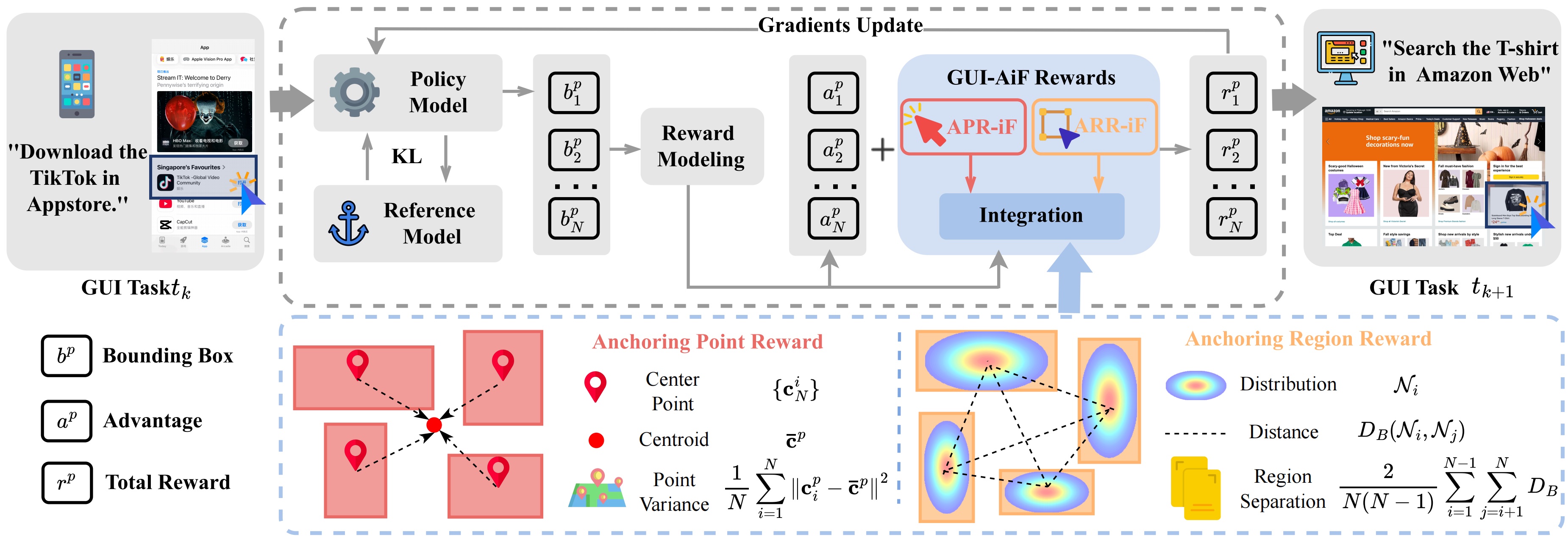
Ziwei Liu, Borui Kang, Hangjie Yuan, Zixiang Zhao, Wei Li, Yifan Zhu, Tao Feng†
- We introduce Continual GUI Agents, a new task that requires GUI agents to perform continual learning under shifted domains and resolutions.
- We introduce GUI-AiF, a Continual GUI Agents framework with the ability to perform Anchoring in Flux.
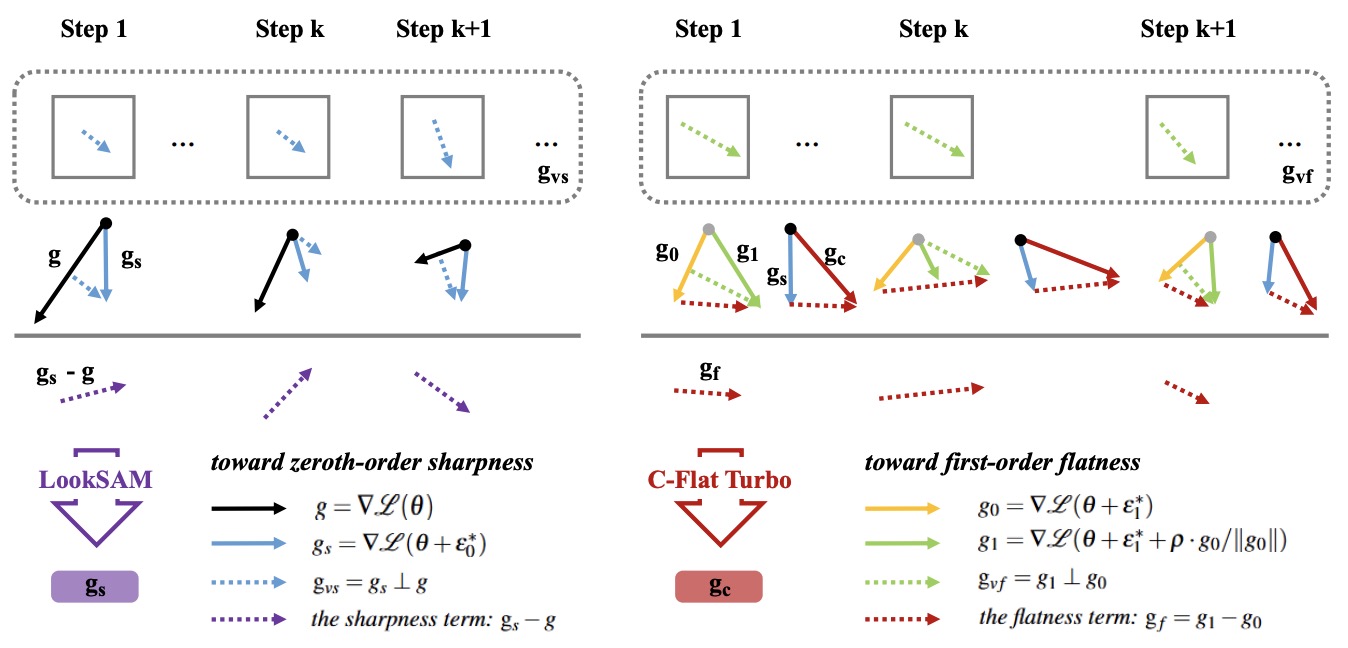
A Faster Path to Continual Learning
Wei Li, Hangjie Yuan, Zixiang Zhao, Borui Kang, Ziwei Liu, Tao Feng†
- C-Flat requires three additional gradient computations per iteration, imposing substantial overhead on the optimization process
- We propose C-Flat Turbo, a faster yet stronger optimizer that significantly reduces the training cost.
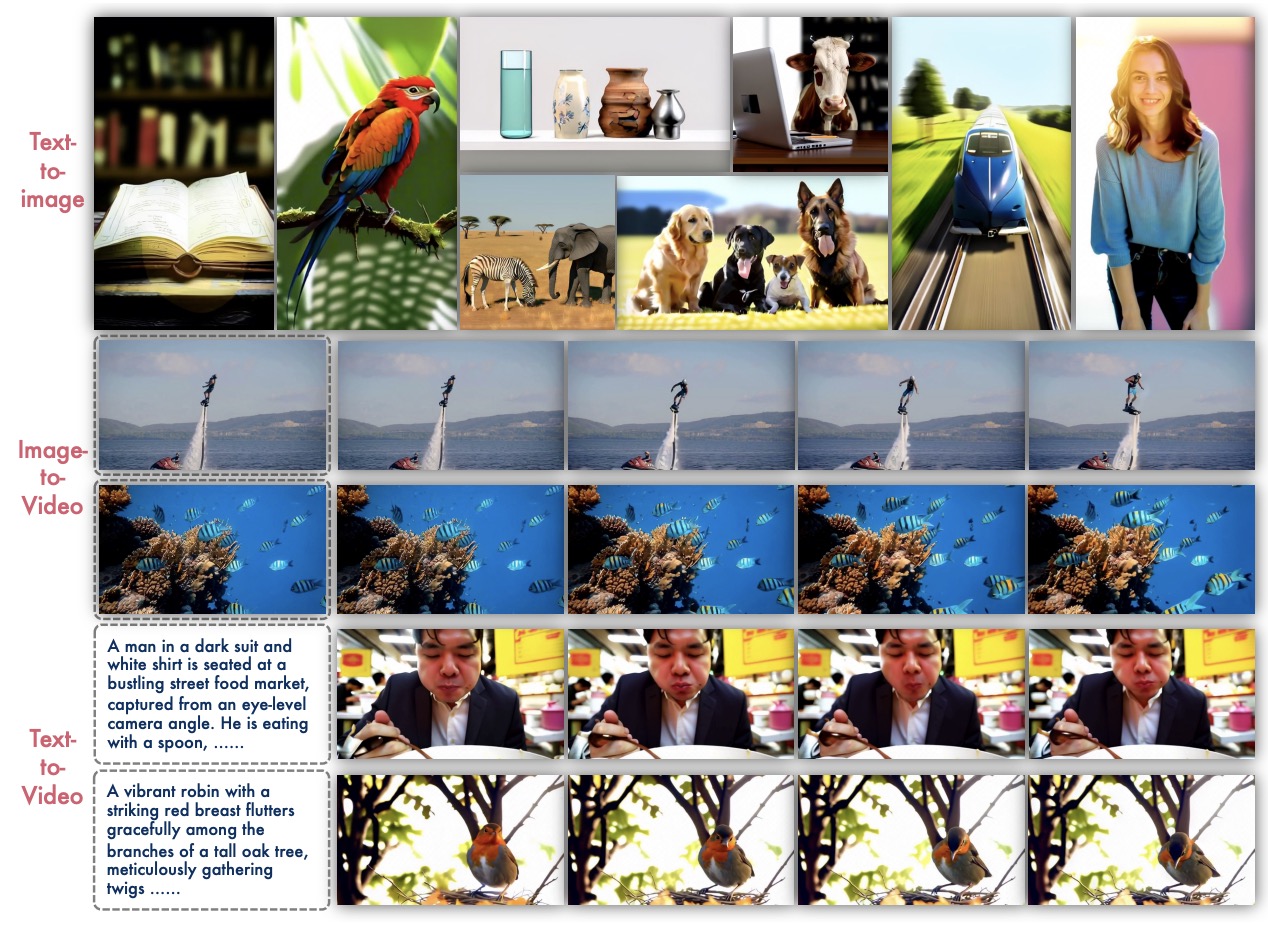
Lumos-1: On Autoregressive Video Generation from a Unified Model Perspective
Hangjie Yuan, Weihua Chen, Jun Cen, Hu Yu, Jingyun Liang, Shuning Chang, Zhihui Lin, Tao Feng, Pengwei Liu, Jiazheng Xing, Hao Luo, Jiasheng Tang, Fan Wang, Yi Yang
- Existing AR video generators either diverge from standard LLM architectures, depend on bulky external text encoders, or incur prohibitive latency due to next-token decoding.
- We introduce Lumos-1, an LLM-based unified model for AR video generation with efficient discrete diffusion.
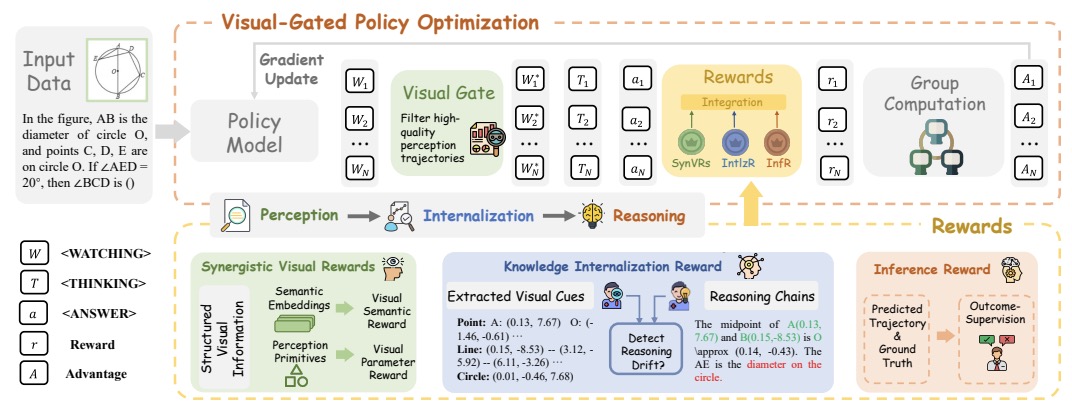
Shuhang Chen, Yunqiu Xu, Junjie Xie, Aojun Lu, Tao Feng, Zeying Huang, Ning Zhang, Yi Sun, Yi Yang, Hangjie Yuan
- We present CogFlow, a novel cognitive-inspired three-stage framework that incorporates a knowledge internalization stage, explicitly simulating the hierarchical flow of human reasoning.
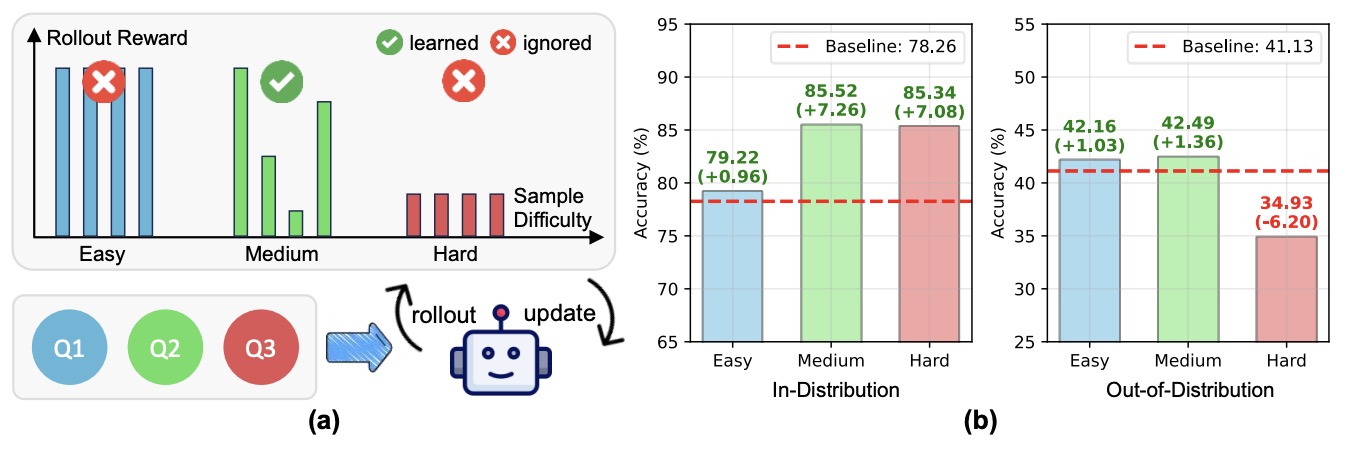
Why Does RL Generalize Better Than SFT? A Data-Centric Perspective on VLM Post-Training
Aojun Lu, Tao Feng, Hangjie Yuan, Wei Li, Yanan Sun
- We posits a data-centric explanation for this phenomenon, contending that RL’s generalization advantage arises from an implicit data filtering mechanism that inherently prioritizes medium-difficulty training samples.
- We introduce Difficulty-Curated SFT (DC-SFT), a straightforward method that explicitly filters the training set based on sample difficulty.
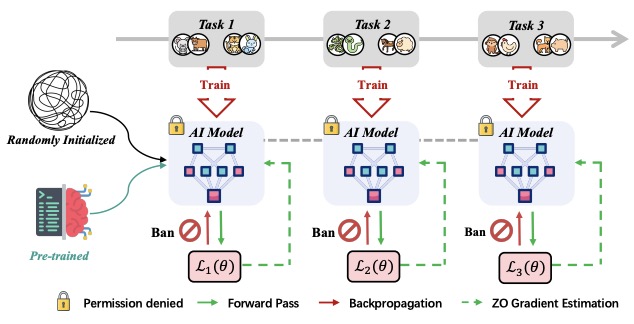
ZeroFlow: Overcoming Catastrophic Forgetting is Easier than You Think
Tao Feng, Wei Li, DiDi Zhu, Hangjie Yuan, Wendi Zheng, Dan Zhang, Jie Tang
- We introduce ZeroFlow, the first benchmark designed to evaluate gradient-free optimization algorithms for overcoming forgetting.
- We find that forward passes alone are enough to overcome forgetting. Maybe, once is all it takes!
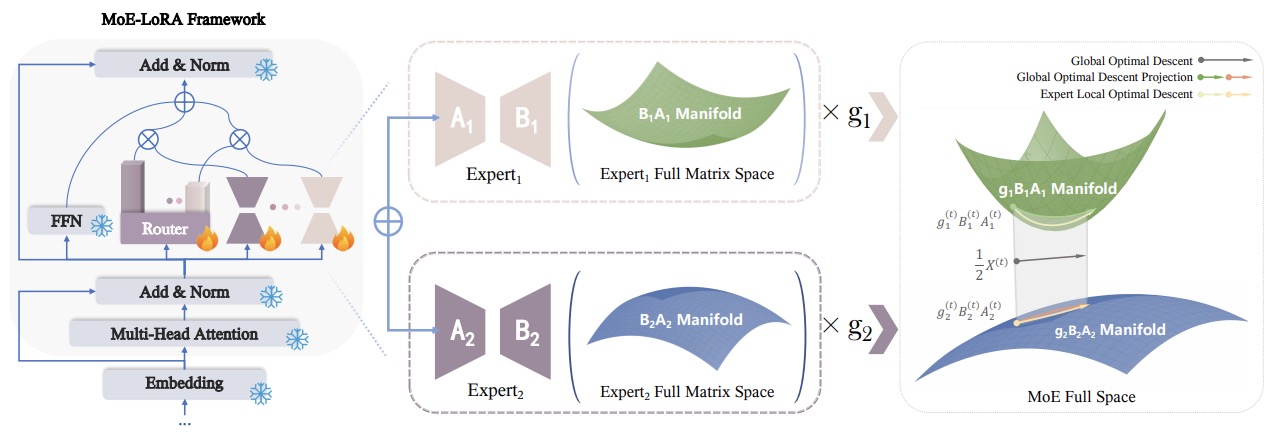
A Stronger Mixture of Low-Rank Experts for Fine-Tuning Foundation Models
Mengyang Sun, Yihao Wang, Tao Feng†, Dan Zhang, Yifan Zhu, Jie Tang†
- We propose a new training strategy for MoE-LoRA, to stabilize and boost its feature learning procedure by multi-space projections.
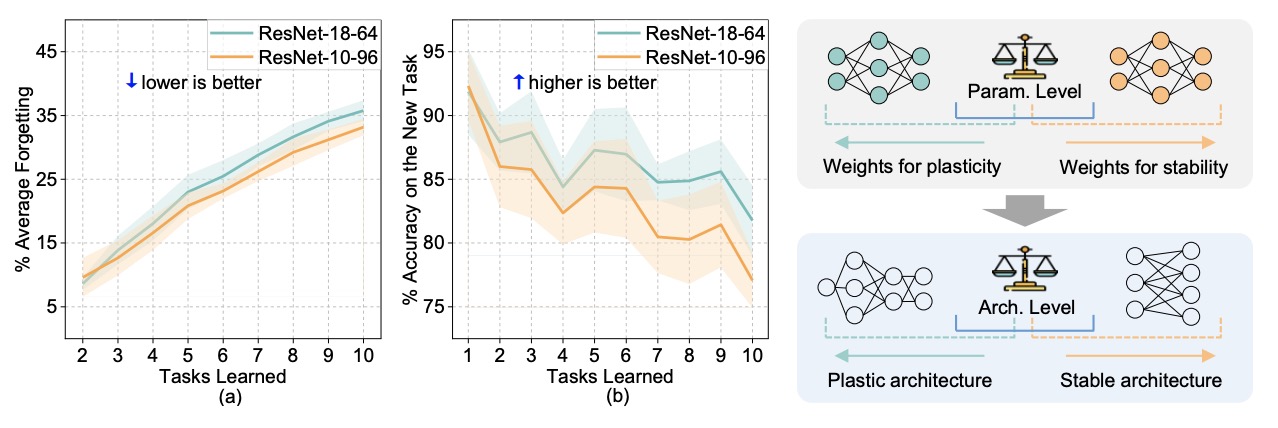
Aojun Lu, Hangjie Yuan, Tao Feng†, Yanan Sun
- We propose a novel insight for exploring the stability-plasticity tradeoff from an architectural perspective.
- We introduce a novel framework denoted DualArch, which serves as a plug-in component for continual learning.
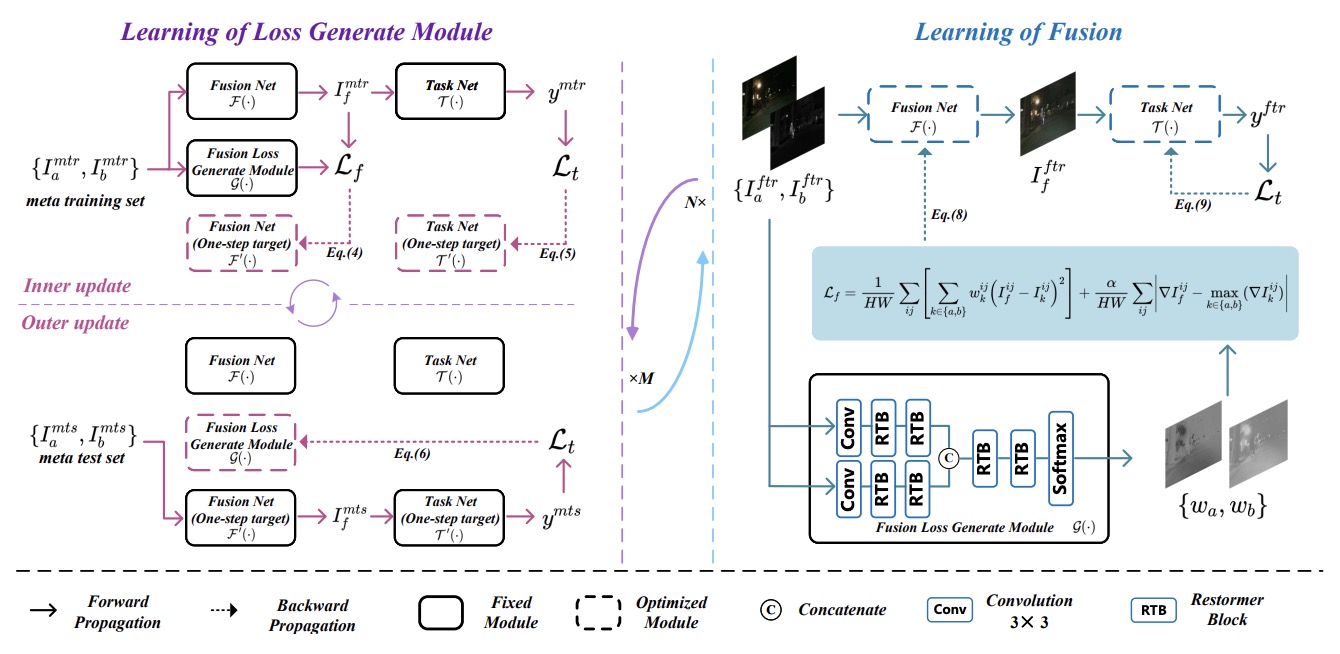
Task-driven Image Fusion with Learnable Fusion Loss
Haowen Bai, Jiangshe Zhang, Zixiang Zhao, Yichen Wu, Lilun Deng, Yukun Cui, Tao Feng, Shuang Xu
- Our framework includes a dynamically updated, learnable fusion loss generation module.
- TDFusion can be applied to any architecture of fusion and task networks.
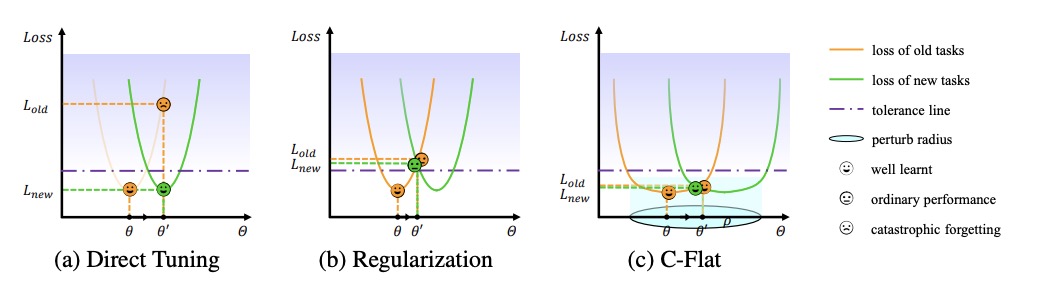
Make Continual Learning Stronger via C-Flat
Ang Bian, Wei Li, Hangjie Yuan, Chengrong Yu, Mang Wang, Zixiang Zhao, Aojun Lu, Ji Pengliang, Tao Feng†
- We propose a Continual Flatness (C-Flat) method featuring a flatter loss landscape tailored for continual learning.
- Just a line of code, Makes Continual Learning Stronger.
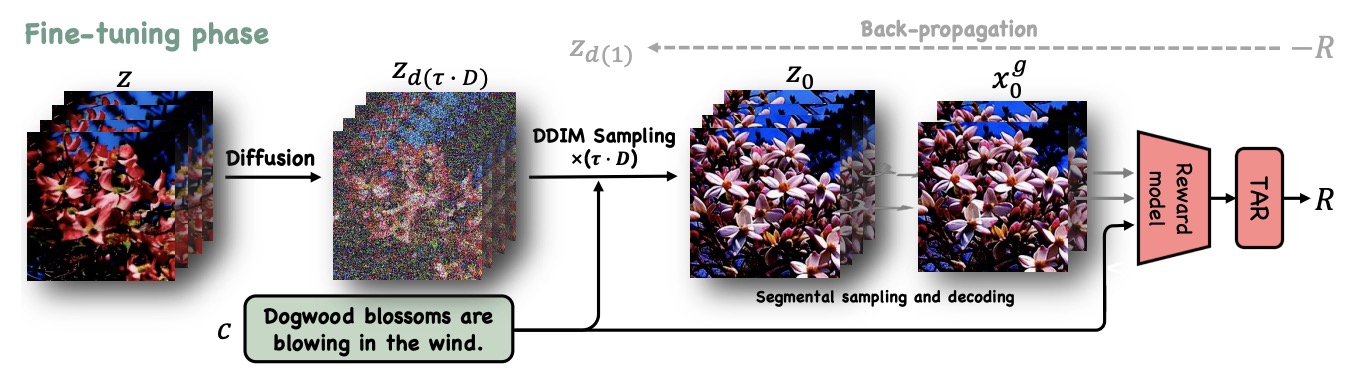
InstructVideo: Instructing Video Diffusion Models with Human Feedback
Hangjie Yuan, Shiwei Zhang, Xiang Wang, Yujie Wei, Tao Feng, Yining Pan, Yingya Zhang, Ziwei Liu, Samuel Albanie, Dong Ni
- We propose InstructVideo, a model that efficiently instructs textto-video diffusion models to follow human feedback.
- To mitigate the absence of a dedicated video reward model for human preferences, we repurpose established image reward models.
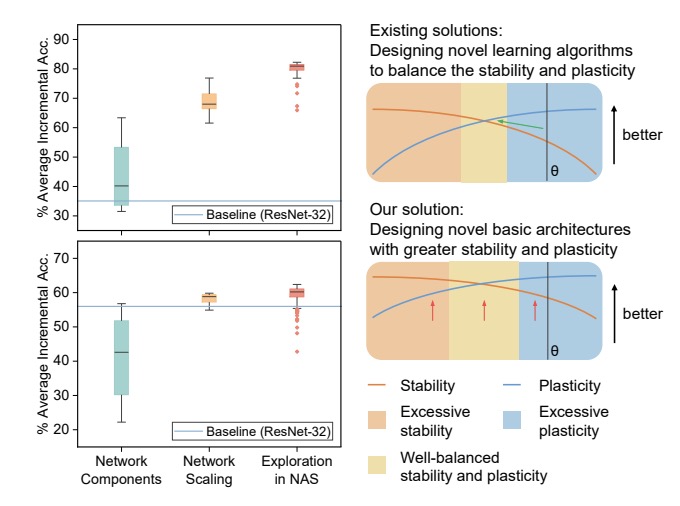
Revisiting Neural Networks for Continual Learning: An Architectural Perspective
Aojun Lu, Tao Feng, Hangjie Yuan, Xiaotian Song, Yanan Sun
- This work is the pioneering effort to employ neural architecture design to shape a CL-friendly architecture.
- We propose ArchCraft method to recraft AlexNet/ResNet into AlexAC/ResAC to guide a well-designed network architecture for CL.
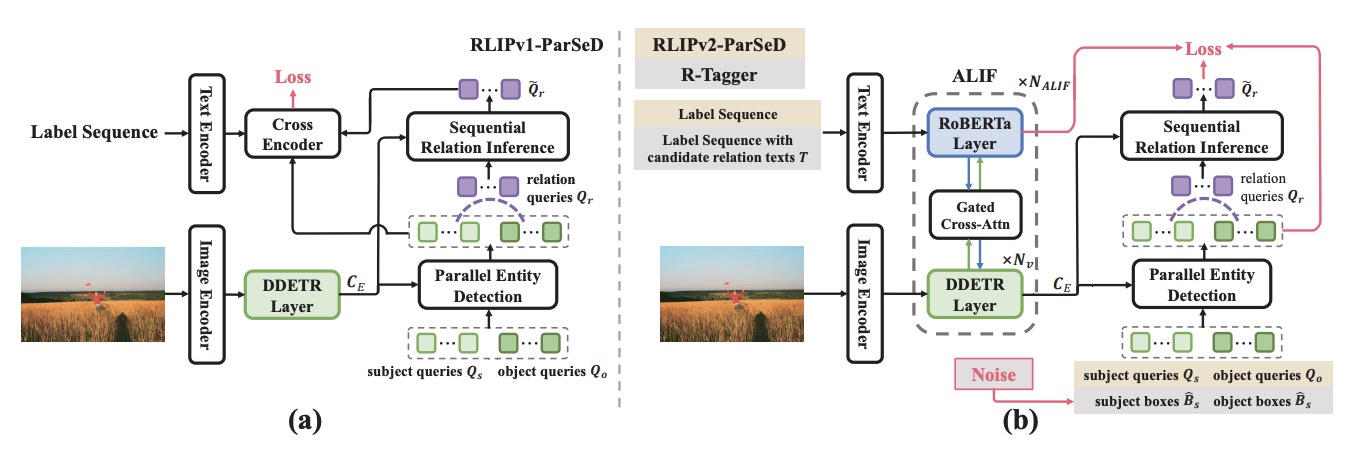
RLIP v2: Fast Scaling of Relational Language-image Pre-training
Hangjie Yuan, Shiwei Zhang, Xiang Wang, Samuel Albanie, Yining Pan, Tao Feng, Jianwen Jiang, Dong Ni, Yingya Zhang, Deli Zhao
- We propose RLIP v2, a fast converging model that enables the scaling of relational pre-training to largescale pseudo-labelled scene graph data.
- RLIPv2 introduces Asymmetric Language-Image Fusion (ALIF), a mechanism that facilitates earlier and deeper gated cross-modal fusion with sparsified language encoding layers.
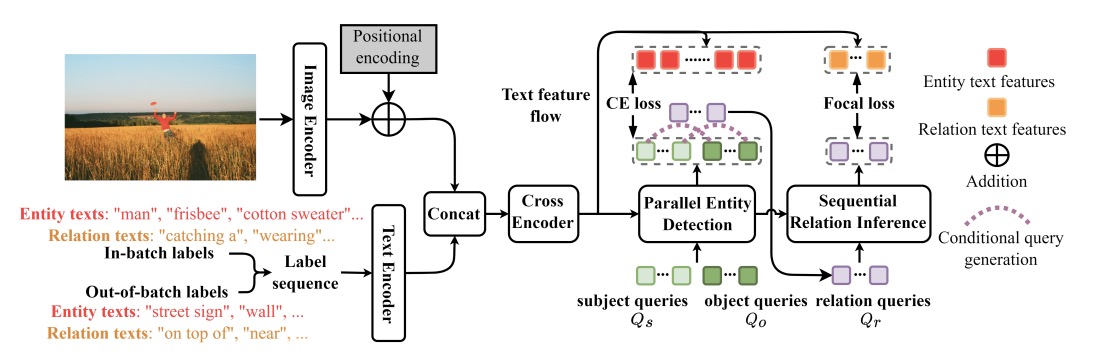
RLIP: Relational Language-Image Pre-training for Human-Object Interaction Detection
Hangjie Yuan, Jianwen Jiang, Samuel Albanie, Tao Feng, Ziyuan Huang, Dong Ni, Mingqian Tang
- We propose Relational Language Image Pre-training (RLIP), a strategy for contrastive pre-training that leverages both entity and relation descriptions.
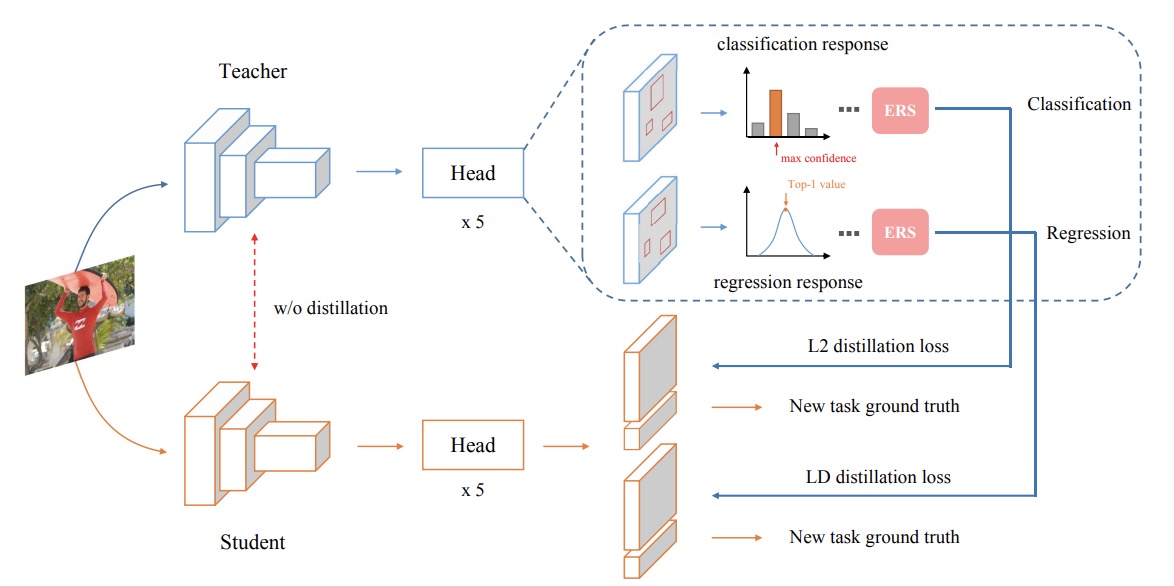
Overcoming Catastrophic Forgetting in Incremental Object Detection via Elastic Response Distillation
Tao Feng, Mang Wang, Hangjie Yuan
- First open-source incremental detection codebase.
- We propose a response-based knowledge distillation method for Incremental Object Detection, dubbed Elastic Response Distillation (ERD).
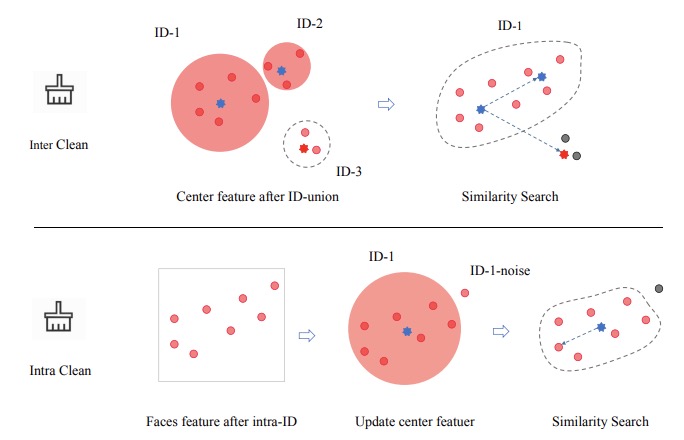
Towards Mask-robust Face Recognition
Tao Feng, Liangpeng Xu, Hangjie Yuan, Yongfei Zhao, Mingqian Tang, Mang Wang
- We introduce a mask-to-face image blending approach based on UV texture mapping, and a self-learning based cleaning pipeline for processing noisy training datasets.
- Considering the long-tail distribution and hard faces samples, a loss function named Balanced Curricular Loss is introduced.
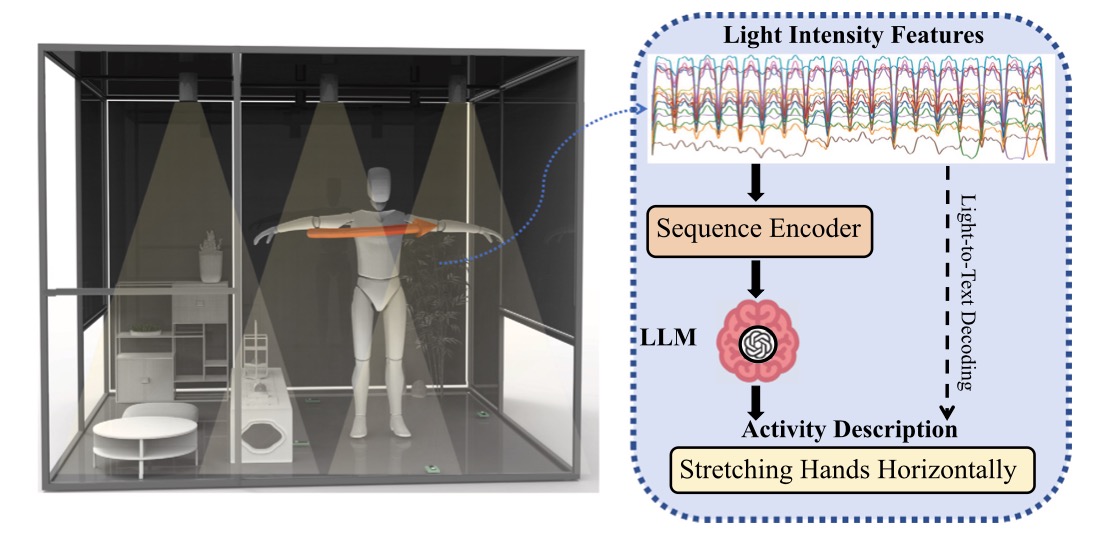
Visible Light Human Activity Recognition Driven by Generative Language Model
Yanbing Yang, Ziwei Liu, Yongkun Chen, Binyu Yan, Yimao Sun, Tao Feng†
- We propose the first HAR foundation model that leverages generative large language models (LLMs) to decode visible light feature representations into human activity descriptions.
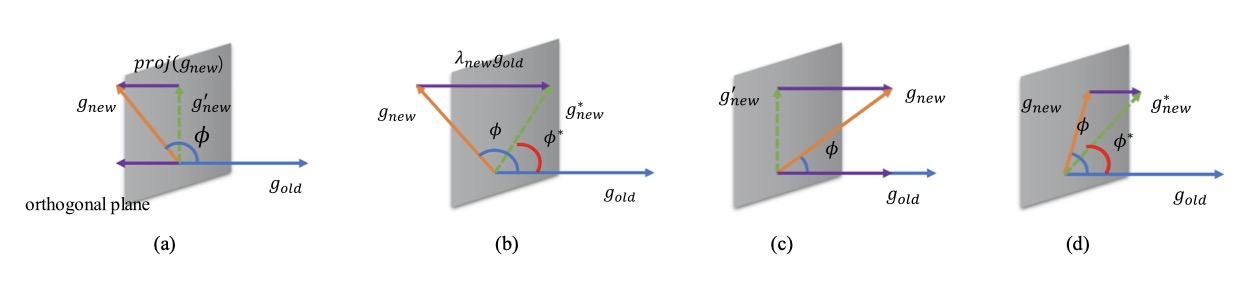
Unigrad-FS: Unified Gradient Projection with Flatter Sharpness for Continual Learning
Wei Li, Tao Feng†, Hangjie Yuan, Ang Bian, Guodong Du, Sixin Liang, Jianhong Gan, Ziwei Liu
- We propose a plug-and-play method UniGrad to tackle the inconsistency of conflicting and non-conflicting gradients in gradient updating for CL.
- We find the flat minima region through perturbing the model parameters in CL.
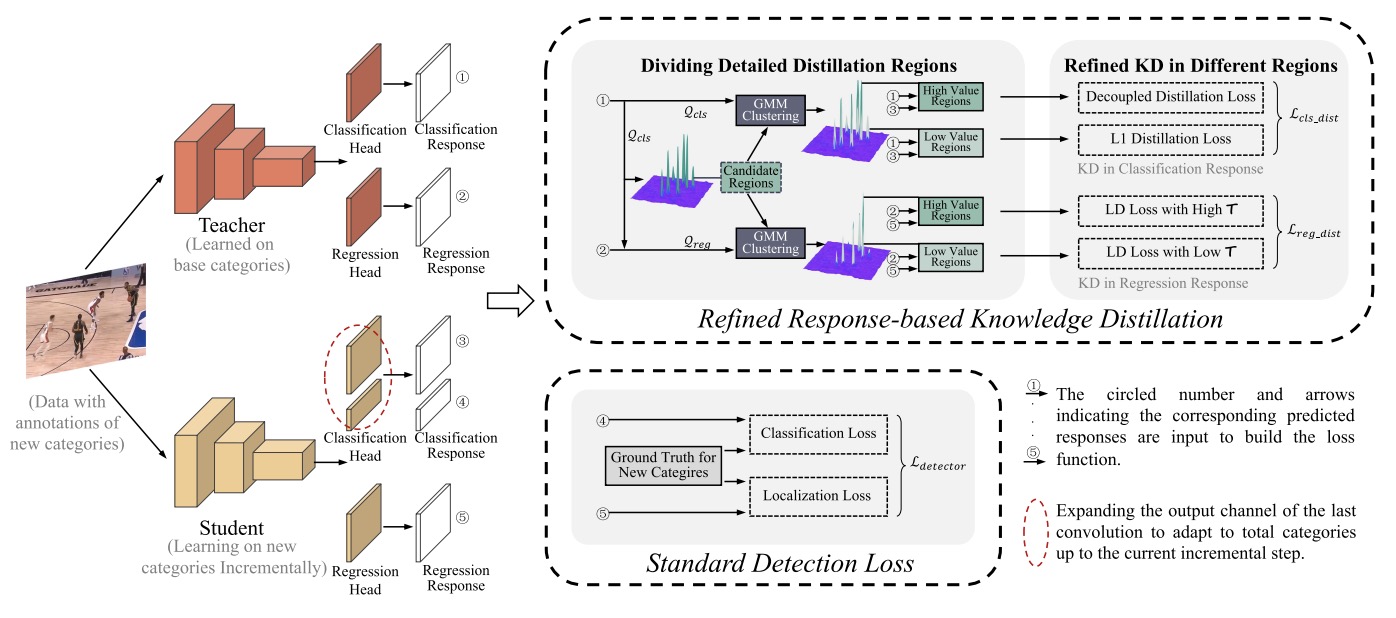
Class-Incremental Player Detection with Refined Response-based Knowledge Distillation
Liang Bai, Hangjie Yuan, Hong Song†, Tao Feng†, Jian Yang†
- We propose a refined response-based KD (R2KD) strategy specifically designed for efficient knowledge transfer in incremental detection.
- We are the first to comprehensively study class-incremental detection in real-world sports broadcast scenarios.
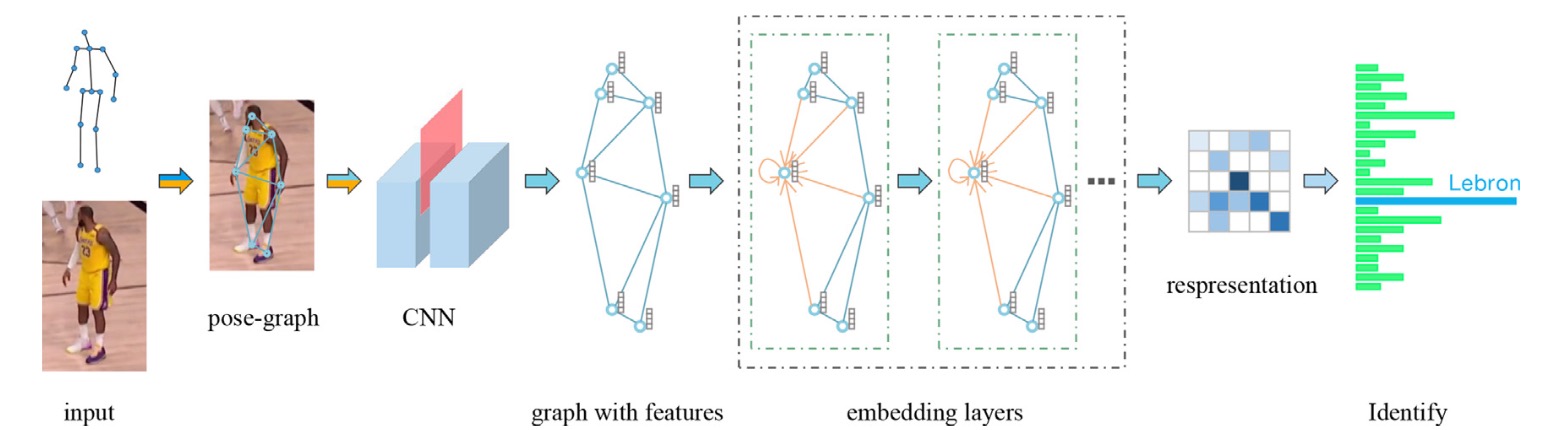
Identifying Players in Broadcast Videos using Graph Convolutional Network
Tao Feng, Kaifan Ji, Ang Bian, Chang Liu, Jianzhou Zhang
- A novel person representation method using graph convolu- tional network at the level of relational induction bias is presented.
- We innovatively embed implicit pose structure information into the deep features to form high-level features.
📖 Academic Service
- Reviewing
- Conferences: ICLR 2024-2025, ICML 2024-2025, NeurIPS 2023-2025, CVPR 2022-2024, ICCV 2023-2025, ECCV 2024, AAAI 2023-2025, IJCAI 2023-2025 ACL 2025 and KDD 2024-2025
- Journals: TPAMI, IJCV, TIP, TMM, TCSVT, TNNLS, TII, TIM and PR etc.
- Services
- Guest Editor for the Special Issue of Journal of Imaging